

In our home, Goose often gets to choose whether we listen to the news (on public radio) or to music during dinner. One evening in mid-June, she chose the news. We’d been getting home later than normal, so neither of us had had our fill of current goings on. As Audie Cornish and Mary Louise Kelly explained the family separation crisis on All Things Considered, Goose’s eyes got wide, and she asked if we were going to be separated from each other. I was surprised. This is the girl who has placidly listened to details about the Jim Jones atrocity and Hitler’s drug use on Fresh Air (despite my pleas for music those evenings), and who at age 4 asked to have Terry Gross over for dinner.
I tried to reassure Goose that what was happening would not tear she and I apart, while at the same time give her an idea of what was happening to the families seeking asylum on the southwestern border. She usually gets the point, blames the chaos on the people in power and moves on, but this time was different.
In the morning when I asked her what we should do about the family separation crisis, she said “hide.” Clearly I had done neither a good job of reassuring her, nor of explaining the situation. I had a faint memory of learning how to deal with these situations, and remembered two presentations I’d witnessed over the past two years about how to help children deal during anxiety-producing situations.
In 2017, before Goose entered kindergarten, my friend Monica arranged for some professionals, including two counselors, to talk to parents at the local elementary school about how to deal with their children’s fear surrounding the political climate, and immigration and deportation. Although my daughter wasn’t attending yet, she would be that fall, and I thought the topic would be useful. This past school year with the help the school’s wellness council, these two experts—Dr. Margot Burke, Child Psychologist, and Dr. Pamela Vail, Clinical Psychologist — returned to speak to parents on the same topic, but this time in light of the shooting at Marjory Stoneman Douglas High School.
I have done a lot with my Goose to ensure she is both engaged and active in regards to social justice and political awareness, but this is the first time she seemed worried about herself. Even the morning after the 2016 election, when she sat up and asked if she’d awoken to a safe world, it was she who patted my back, handed me tissues, and comforted me, while I sobbed in response — our roles should have been reversed.
 I’m lucky that this month I recalled attending those presentations, but we at TME are even more grateful to have Shana’s dear friend, Kirsten Ellingsen, PhD., give us some of her own sage professional advice. Dr. Ellingsen is a child psychologist and mom who currently resides in Florida. She thoughtfully took the time to provide us with step-by-step guidance and wise words in order to help us help our kids through troubled times.
*Where relevant, I’ve added in tips from Dr. Burke and Dr. Vail, noted by italics.*
Recommendations: Talking with Your Children About Family Separation (and Other Crises)
Be Honest and Age-Appropriate
Be honest, but keep your language and content age- (and developmentally) appropriate. Be prepared and know generally what you want to say.
- Think about what you want to say and why. There are complex issues related to immigration, enforcement, politics, and trauma, so try to address your child’s concerns.
- Let your child’s questions be your guide. Consider whether you need to provide more information than they are asking.
- Be mindful of your tone; the current political climate is highly emotionally charged, and consider what is helpful for a child to hear.
- Let children know that negative, aggressive language about anyone is not OK.
- Focus on the behavior not the person (if relevant): the person is not bad: the person has policies that conflict with our family values; the person made a decision we don’t agree with.
Keep it simple and straightforward. Be careful to discuss in a calm and rational way.
Validate feelings and normalize emotions: Try not to dismiss or minimize concerns or feelings expressed (e.g., ‘its OK to feel scared, mad or sad’). Allow children to express their feelings. While being careful not to minimize or dismiss, also reassure your children that they are safe.
Where? Ideally, when you can give your child your full attention, when you are calm (e.g., at the dinner table, seated together at home).
- Early childhood: Young children need to be protected from distressing news coverage. Limit television watching and emotional discussions when children are present. If a child has seen images or coverage and is concerned, provide a very simple statement with an emphasis on how they are safe and will be protected by their grown-ups.
- Young children (ages 0-6): Limit exposure to news, especially pictures. Even if you think that a child is not paying attention, if they can see or hear you, chances are they are aware; if you are upset and have a strong reaction (which is normal and understandable) this could be upsetting and confusing.
- Middle Childhood (6-12): Provide simple information, and assure safety. Limit details so as not to overwhelm. Let children ask questions and lead conversation. You can start a discussion asking what he or she knows and feels. This also allows you to clarify any misinformation or inaccurate information. Help the child put events into perspective.
- Adolescents: Provide opportunities to talk, listen, help address misinformation, and support. Introduce opportunities to talk (e.g., at the dinner table, in the car, while walking to or from school).
- Consider child temperament, limiting repeated exposure to images or news coverage for anxious or sensitive children.
Aware and Self-care
While children may not understand abstract concepts, they will pick up on the emotional response of parents. They may be attuned to the emotional state of the parent and will be watching.
It is important to be aware of how this situation is affecting you and get support needed. Children will watch your reactions — model calm and rational responses. Be aware of how the situation is affecting you and what your children see as your reaction.
Model healthy coping and label your feelings. Identify positive coping strategies for children; label your feelings or theirs.
- Talk about how you are managing your feelings; this also reinforces building good coping strategies (‘I am sad about what is happening. When I feel this way I like to take a nice walk, to snuggle you, to listen to music’.)
- Take care of yourself with good sleep, healthy food, exercise, and participation in fun, relaxing, and enjoyable activities alone, as well as with your children.
Watch children for signs of fear, anxiety, or confusion. Observe changes in sleep, eating, play, behavior. You don’t want to increase fear or worry. Children pick up on the emotions of their parents.
Safe and Secure
Keep the BIG-PICTURE perspective. The goal is to leave your child feeling safe and secure (not overwhelmed and helpless). Children need to feel safe and secure in order to be healthy and function well.
- Limit access to news and coverage, especially visuals.
- Reassure your child that you will do all you can to keep them safe. Remind them how they are loved.
- Point out and talk about the people who are doing good and trying to help (kind and caring people). Let them know that bad things happen and injustice is part of life, but that there are people (grown-ups) also working to change this.
- Model caring and compassionate responses.
- Let your child know you can talk about this again.
- Depending on the age and interest of the child, help them find ways to get involved and feel a part of positive change (raising money, writing letters, making signs, engaging in peaceful protest, etc.,)
- Keep home a safe haven, and maintain consistent (‘normal’) routines at home.
Resources for Helping Kids During Troubled Times
Non-fiction Resources
Tips for talking with and helping children and youth cope after a disaster or traumatic event.: A guide for parents, caregivers, and teachers (Substance Abuse and Mental Health Services Administration)
How to talk to children about difficult news (American Psychological Association)
How To Talk With Kids About Terrible Things (Cory Turner on NPR)
How to Talk to Young Children About What’s Happening to Families at the Border (big city moms)
Supporting Vulnerable Students in Stressful Times: Tips for Parents (National Association of School Psychologists)
Managing News
Explaining the News to Our Kids (Common Sense Media)
How much news coverage is OK for children? (American Psychological Association)
Disrupting young lives: How detention and deportation affect US–born children of immigrants (American Psychological Association)
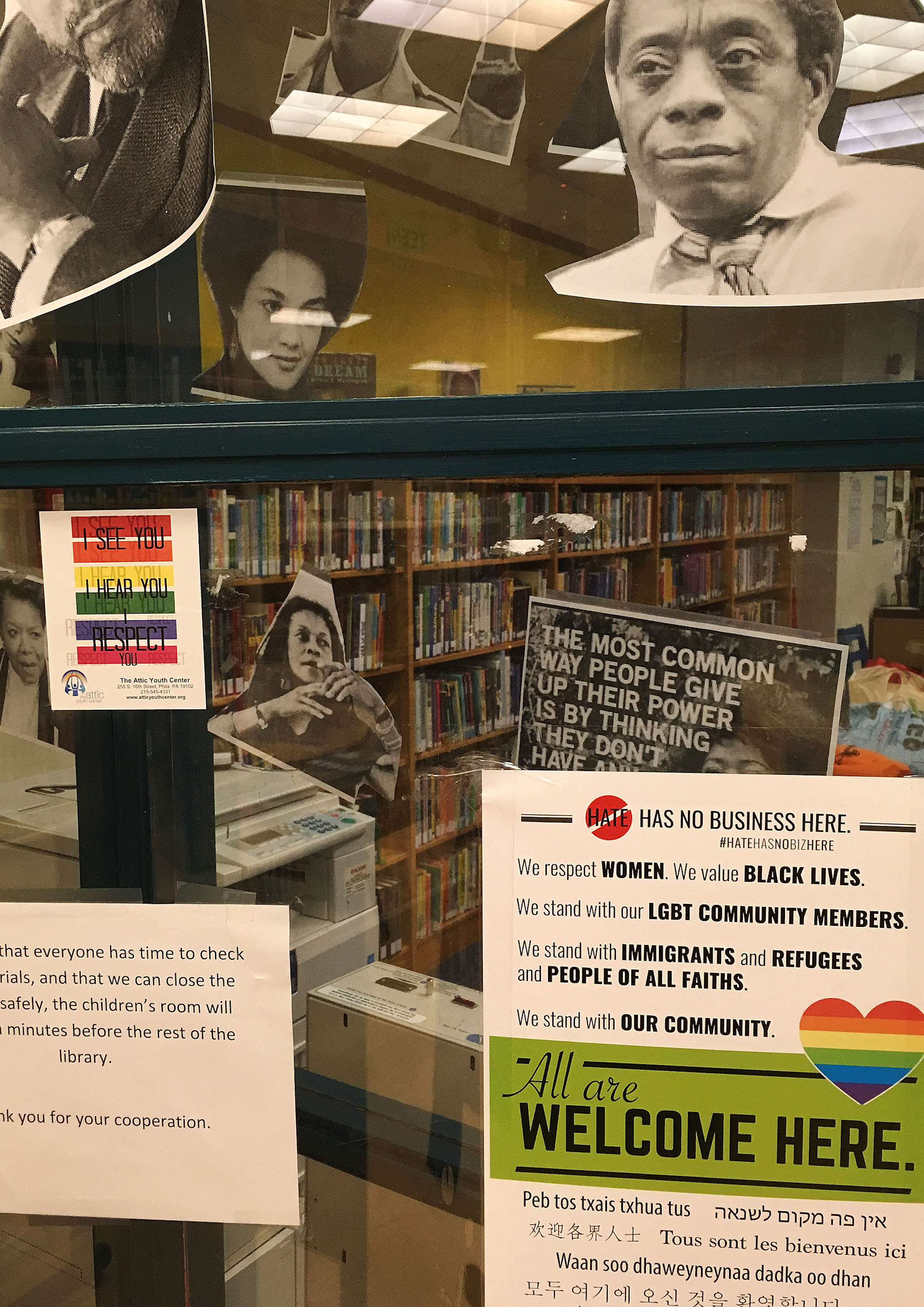 The City Institute branch of Philadelphia’s Free Library has been a phenomenal resource for us. The children’s section is a great place to make new discoveries, many of which are well-worth owning.
How to Help Children When They Are Actively Upset
During their presentations, Dr. Burke and Dr. Vail also pointed out some ways for us to help children calm down when they are upset and/or acutely anxious (crying, yelling, having a temper tantrum, expressing anger/frustration). These tips are helpful as well.
To help children learn to self-regulate, engage in mutual regulation (You + the child, not the child alone).
- If a need isn’t met, it will persist: hearing the need and empathizing with the need can resolve the need.
- We become our kids’ inner voice: what do we want them to replay?: ‘they will be safe’; ‘they can handle this’. Attitude should be: ‘You seem angry, but you can handle it’. Tell them they are able to calm down. That will be their inner voice. BE their coach.
We need to time in during big emotion, not time out.
- We can send them to their rooms, but we go with them: the message is that ‘I can handle your big emotions’ — not ‘I can’t handle your big emotions, get them away from me’. (We want our children to circle back to us when they’re older).
- Calm the amygdala first (emotional, reptilian part of the brain) before engaging the prefrontal cortex (reasoning and rationale).
- Work to calm: Deep breaths, squeezing something, dancing it out, shaking it off.
- Let them know you’re listening. We want to turn off the ‘fight or flight’.
- Acknowledge their position, empathize with them. Breathe with them. We can set limits and be empathetic at the same time.
- Empathy and acknowledgement—’You seem sad. This is a sad thing that happened’. ‘You seem worried. I can understand why you’d be worried.’
Find out what the bottom worry is.
- If they won’t give information, we have to elicit it from them: ‘I wonder if you’re feeling scared’. ‘It appears you feel sad’. (You “seem” mad, you “seem” sad). So you aren’t assuming, and sometimes they’ll even correct you (‘I’m not mad, I’m sad’).
- Dig down to follow the anxiety to see what they’re truly worried about.

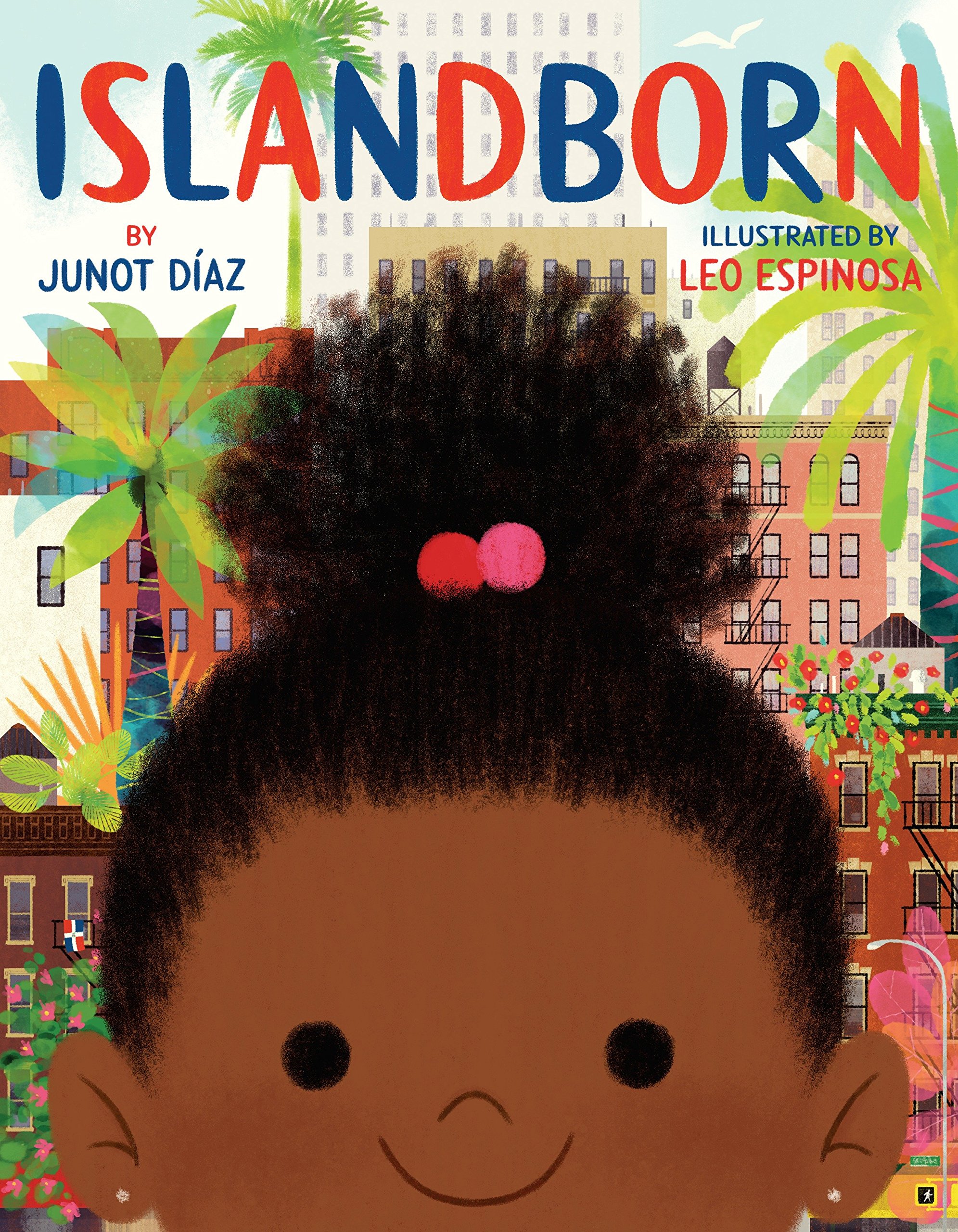
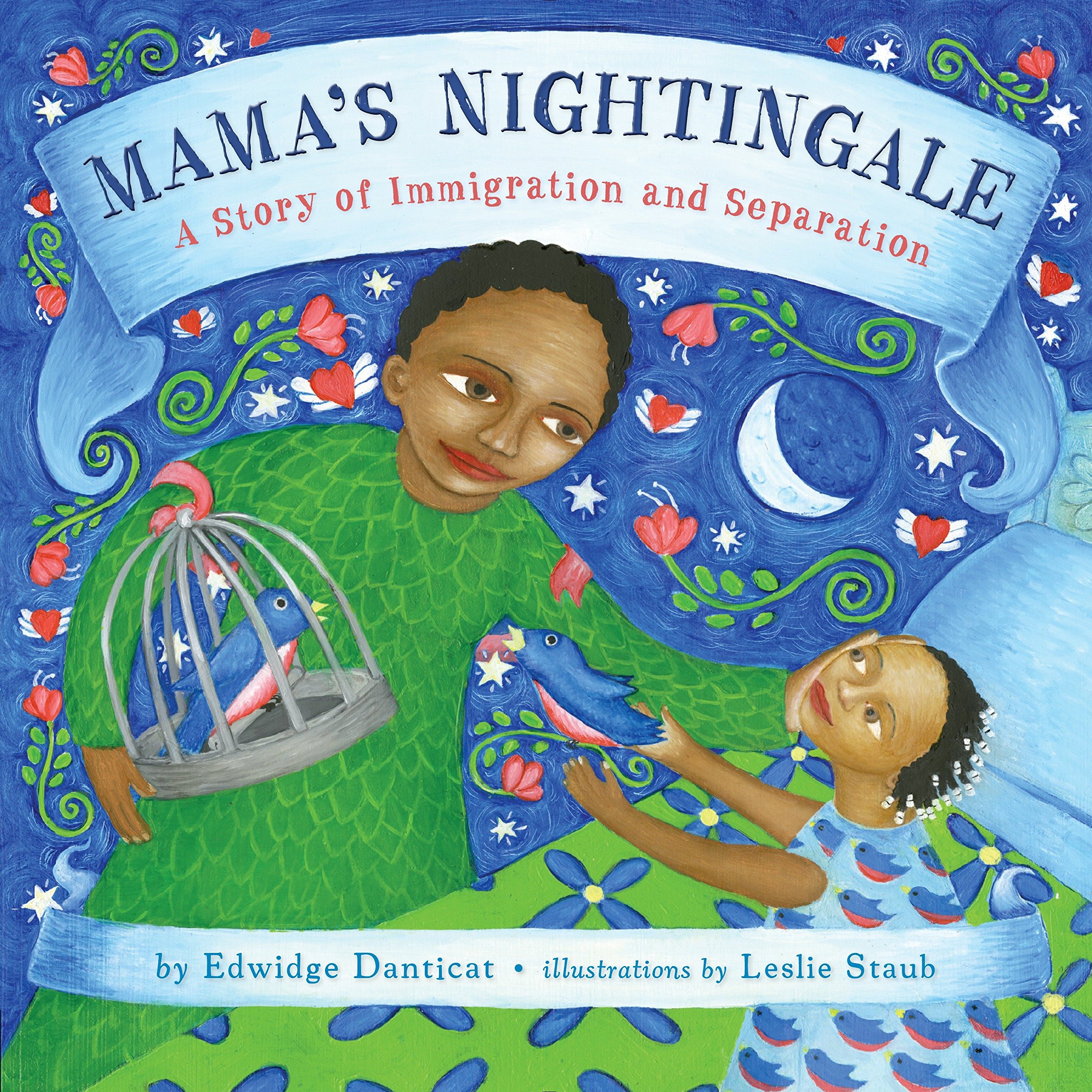
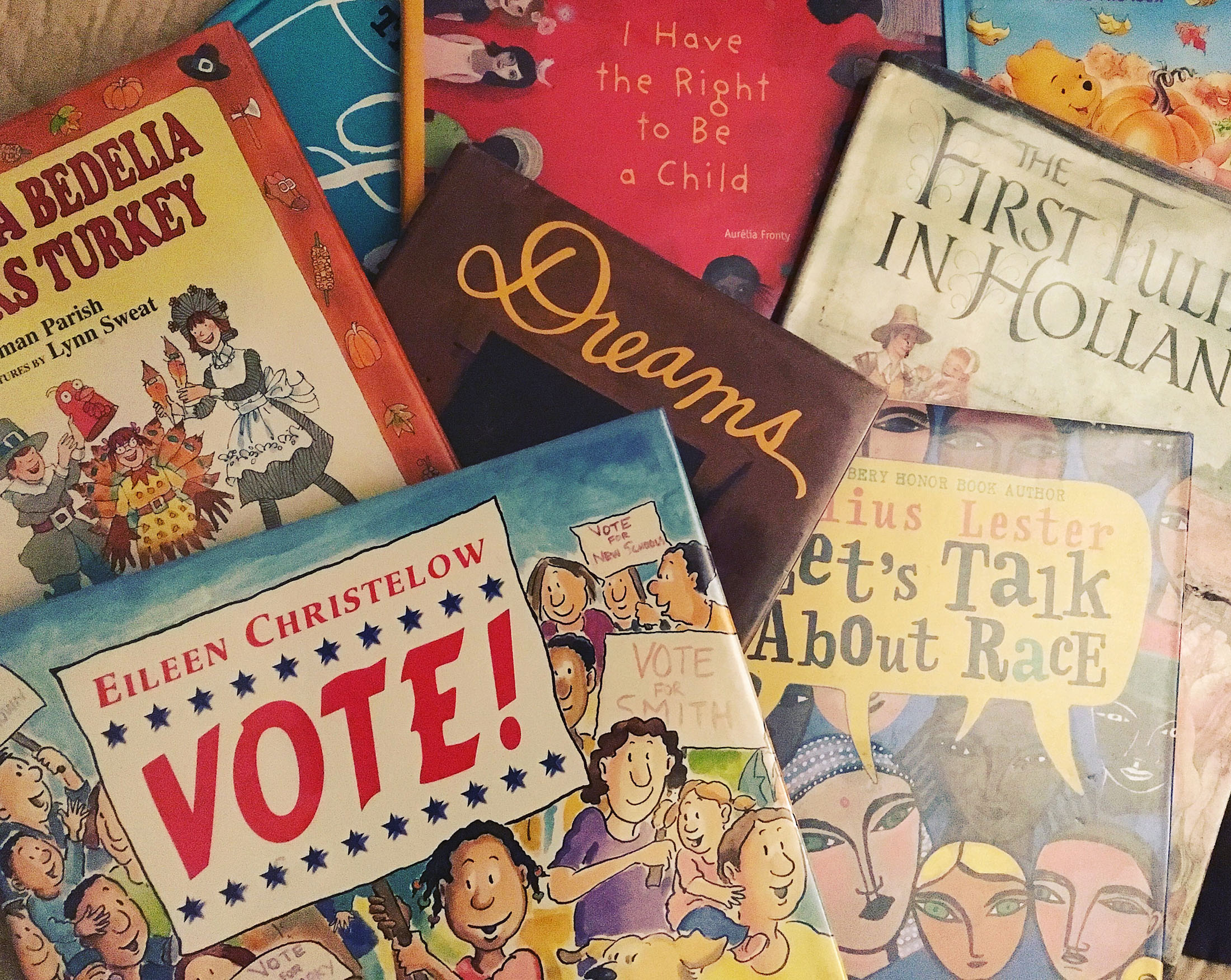
Because it can be difficult to explain the complexity of political and social situations to children, especially younger ones, we’ve added a selection of picture books below that we think might be helpful.
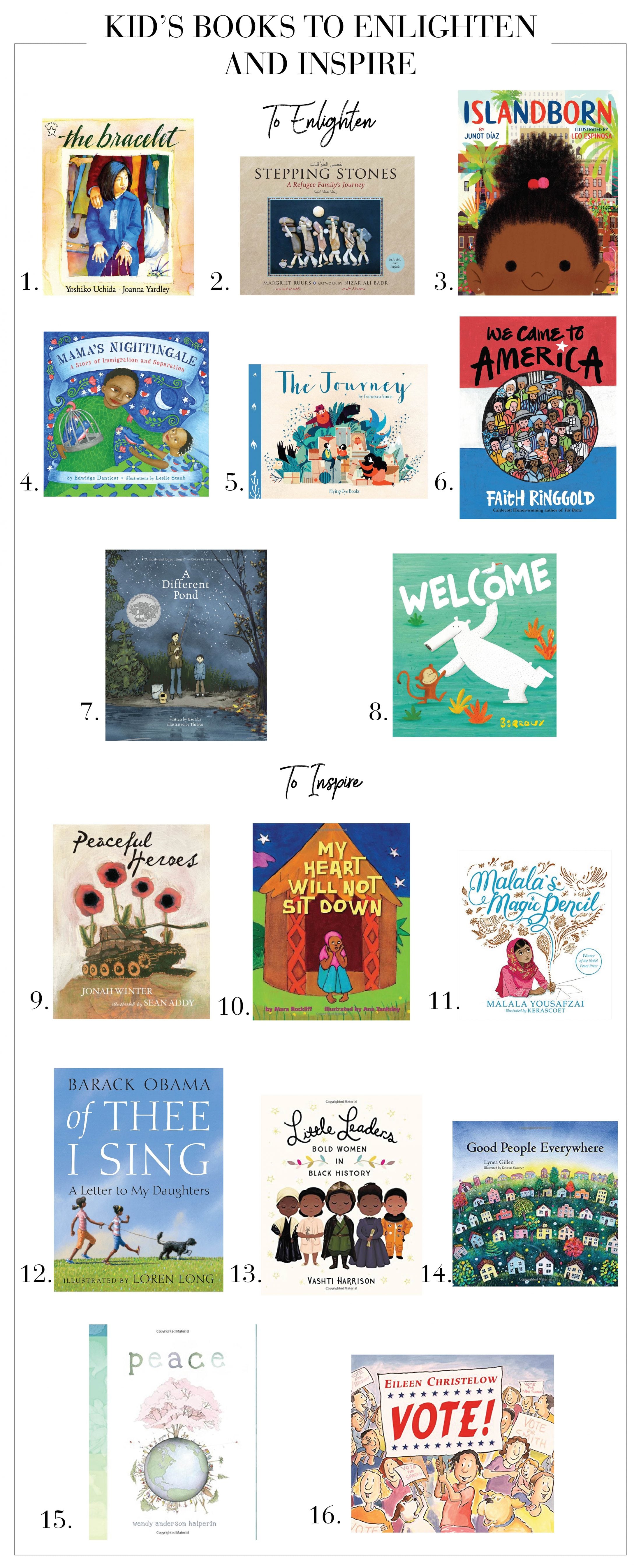
Kids’ Books to Enlighten and Inspire



2. Stepping Stones: by A beautiful picture book offering the story of a refugee family from Syria, in a palatable, child-friendly description and tone. The illustrations are gorgeous, the syntax poetic (in English and Arabic).
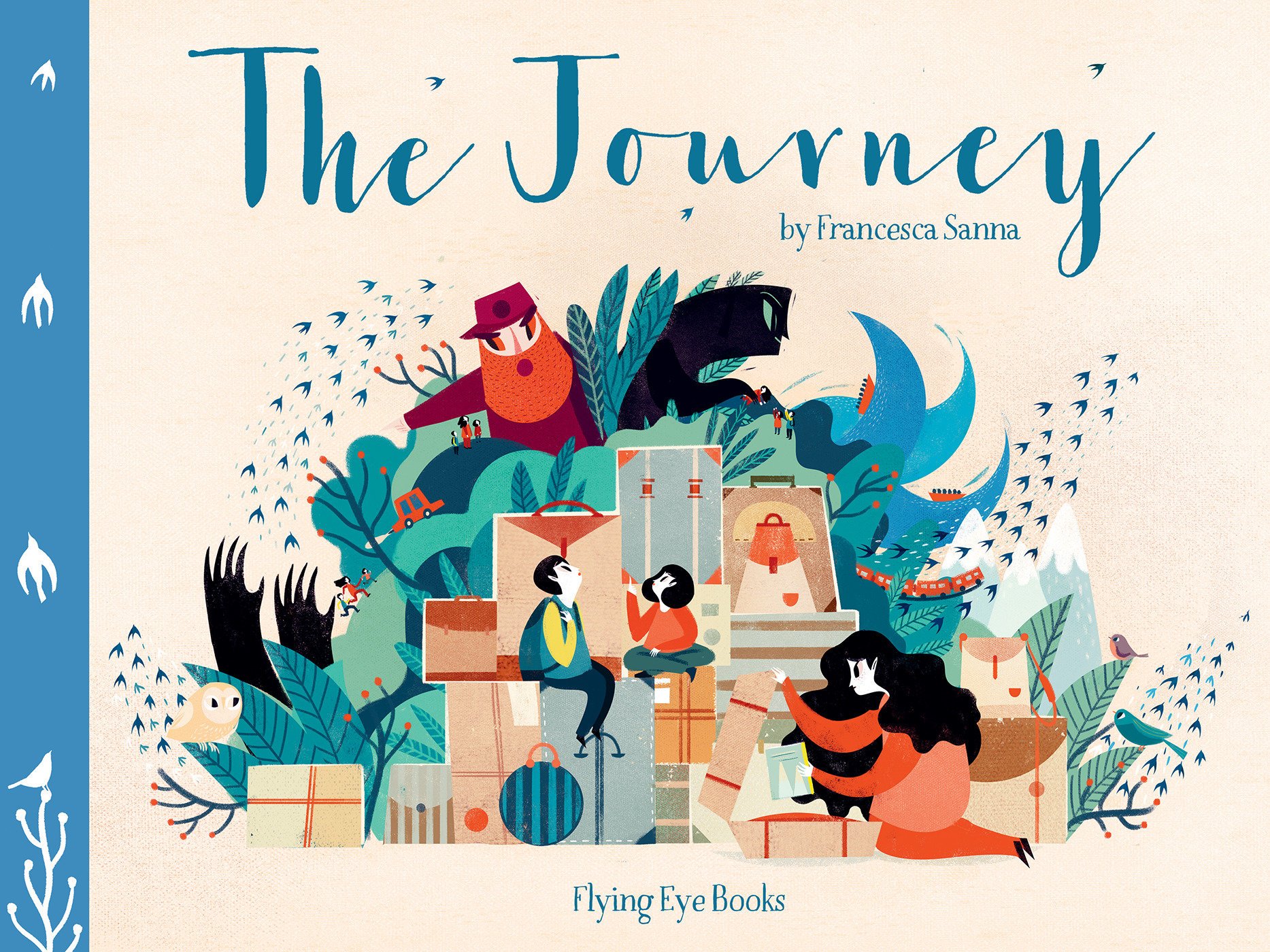
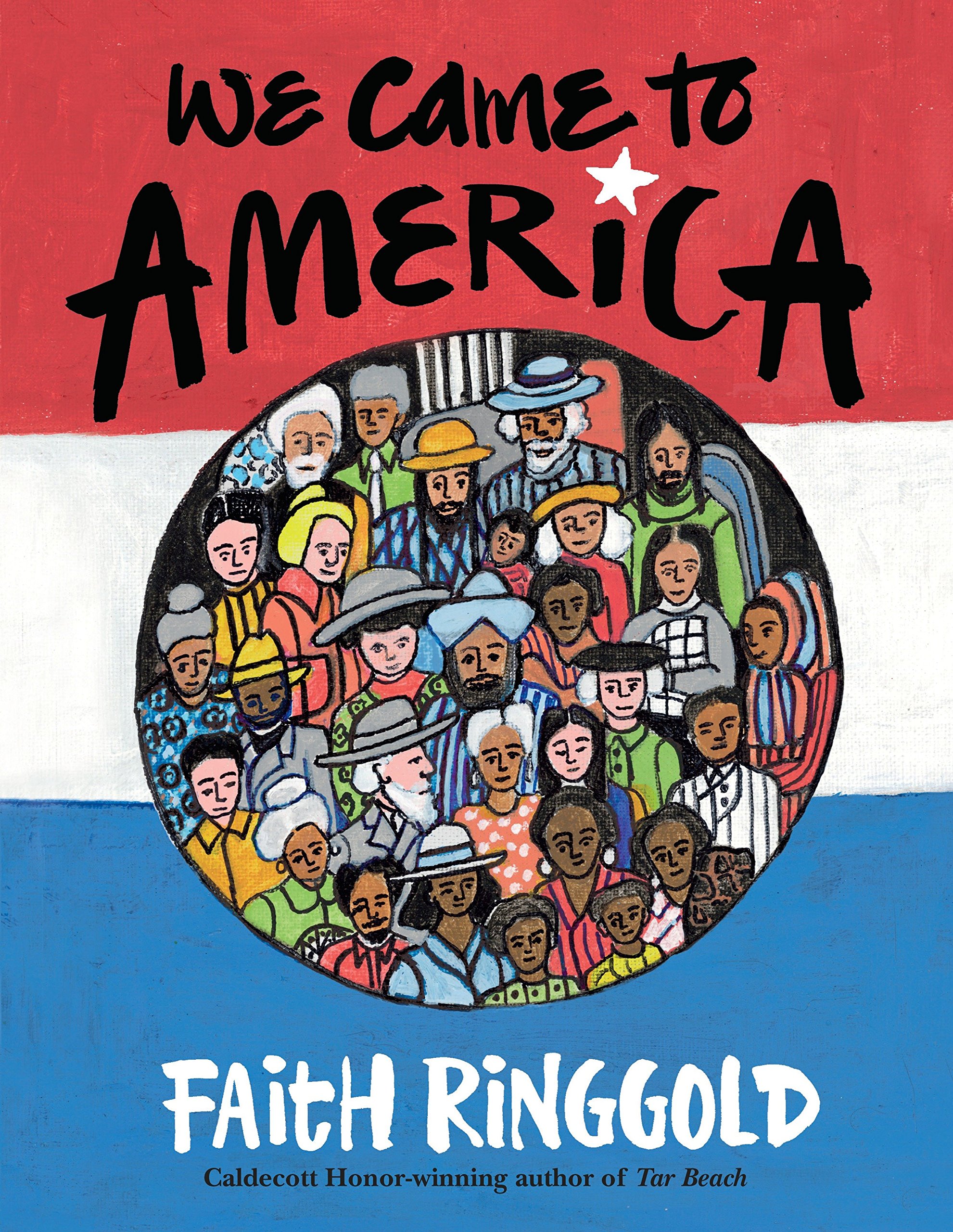



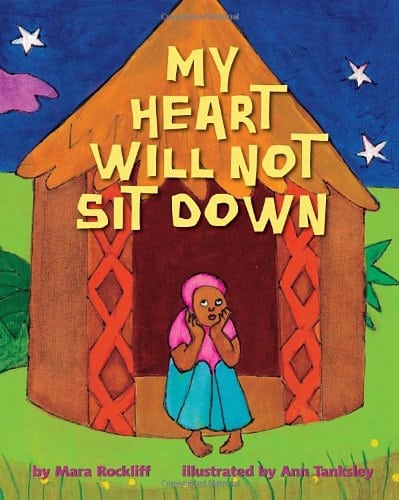

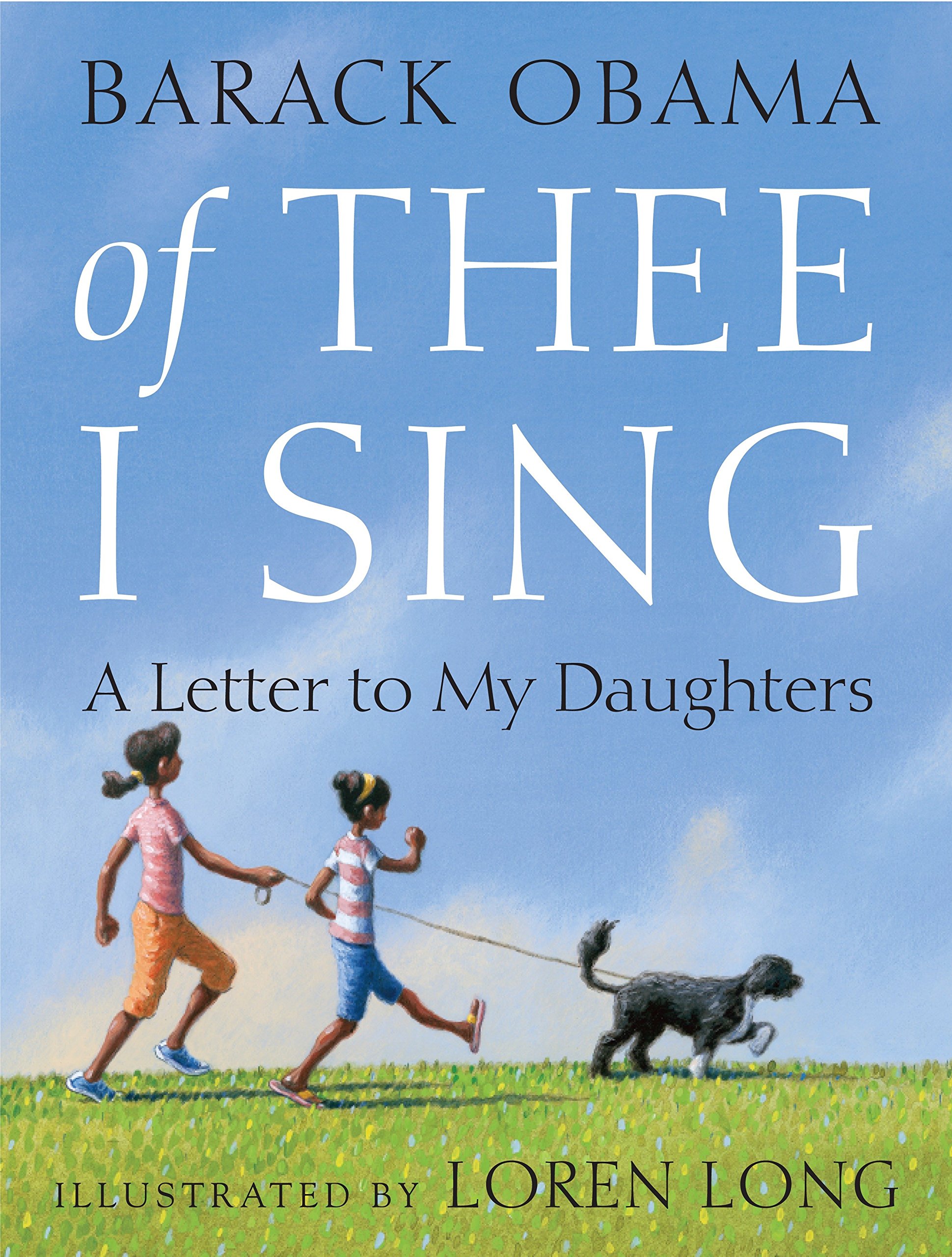




16. Vote!: by Eileen Christelow — This book is super-informative and the format makes it fun and engaging for young children. The content may have been a bit above my five-year-old’s head, but she enjoyed it nonetheless, and wanted to read it over-and-over again. It focuses on a local election, but also includes a timeline of voter rights and other historical information.
Never in my daughter’s life have I had to monitor or stand vigilant against what we might hear on NPR that in the past year and a half — which is ironic since she’s been getting older. But since everything from “grab ’em by the….” to “17 children massacred in their classrooms” to “kids being separated from their parents at the border”, I can’t get to the speaker volume quick enough to turn down the scariness. However, one of the points I remember most from the advice of these sage experts is this: what children imagine is happening based on what they see and hear, is usually going to be far worse than the actual situation. Knowing this, combined with the fact that our voices (up to around ages 8 or 9) become their inner voice, and we need to coach them into feeling they are capable of handling their emotions, highlights how crucial it is for us parents to engage in order to ensure our children feel safe.
We at TME are so grateful for the time Dr. Ellingsen made to write down her recommendations and find us the non-fiction resources for helping our kids cope and managing the news. Those of us in Philadelphia are also thankful for the sessions that Dr. Burke and Dr. Vail presented at our neighborhood school. We truly hope this will be useful to parents and grown-up loved ones everywhere.
Hugs,
Alexis